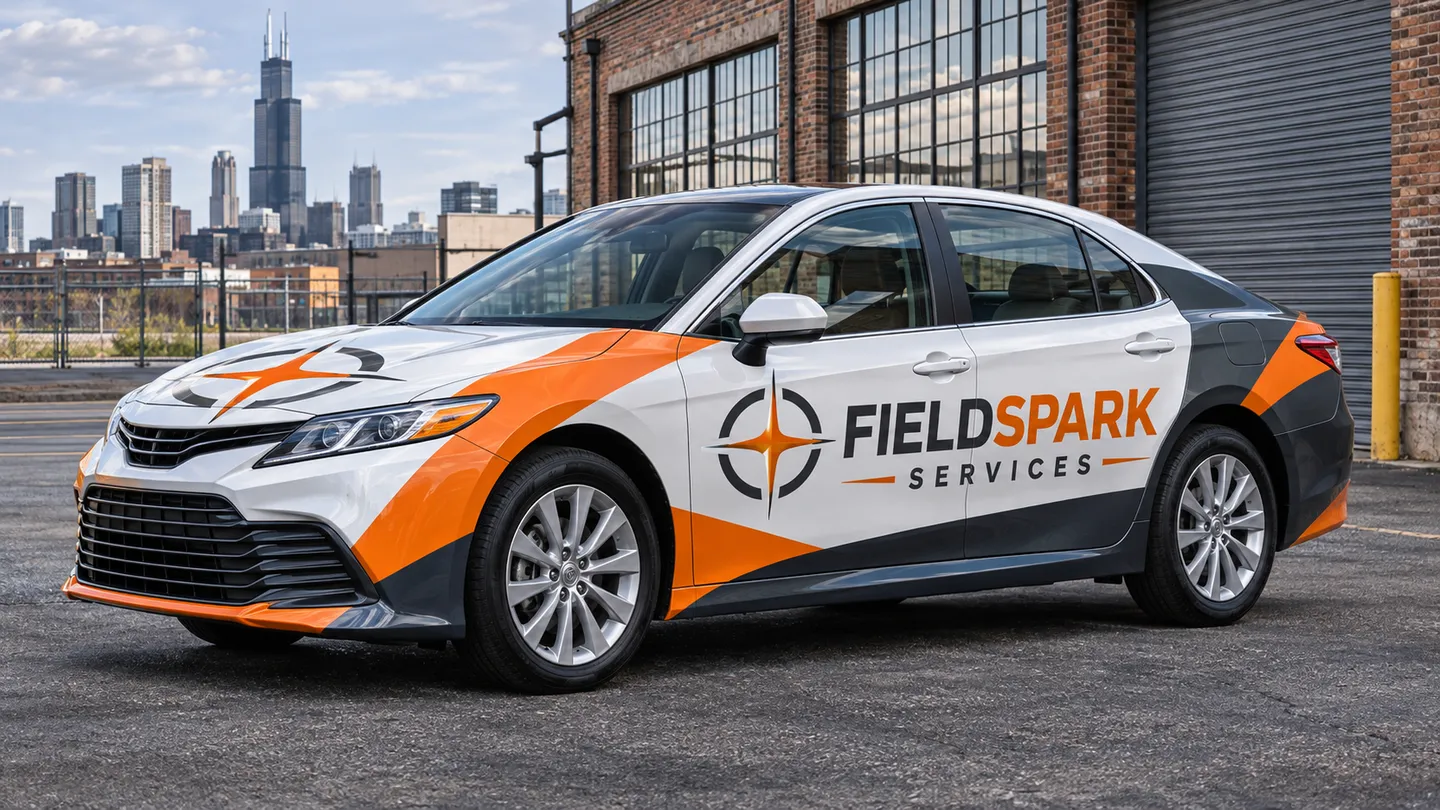
Capture the whole body first
Take clear photographs of the left side, right side, front and rear in usable light. Stand far enough back to include the full vehicle without cutting off bumpers or the roof. Avoid relying only on a wide-angle closeup that changes the apparent shape of panels.
Use the same vehicle reference for every image. Include a readable model or configuration record where available, without publishing private identifiers unnecessarily. Photographs support the inquiry, but dimensions used for production still need confirmation through the supplier’s appropriate measurement and template process.
- Include both sides rather than mirroring one photo.
- Keep the camera reasonably square to the body.
- Label images with a stable vehicle reference.
Show the areas that can change the scope
Add closeups of existing graphics, paint defects, repainted panels, trim and accessories near intended coverage. If a roof rack or door protector blocks a useful area, show how it meets the body. A closeup should have a wider companion image so its location is understandable.
Do not hide a problem because you think it will be covered. Graphics are not a repair specification for an unknown surface. Tell the supplier what you know about previous paintwork and ask what requires in-person assessment before design, pricing or installation can be finalized.
- Pair condition closeups with a location view.
- Show hardware and accessories near graphics.
- Record known repairs as notes alongside photos.
Send a compact, organized inquiry
Choose clear originals rather than a collage that removes detail. Name the intended coverage, current artwork and business wording in the same request. The supplier should be able to relate the images to the surfaces described in the company-car brief without guessing which vehicle is being discussed.
Keep the photo set with the later approved scope. If condition changes before the appointment, send an update rather than assuming the original assessment still applies. For material decisions, use the exact product’s current technical documents and the supplier’s review of the actual surface, not the photograph alone.
- Keep original resolution for condition review.
- Identify which views show the proposed coverage.
- Update the supplier if vehicle condition changes.
Keep a working record
Before you approve the next step
- Photograph left, right, front and rear.
- Add condition and obstruction closeups.
- Label the vehicle consistently.
- Include known repair and graphic history.
- Send originals with a coverage description.
- Keep the images with the accepted scope.
Use the free planning tool to organize the details you can confirm and the questions still open.
Four questions before the next step
Can photos replace a physical inspection?
They help identify the vehicle and open questions. Surface condition, fit, dimensions and installation suitability may still need confirmation on the actual car.
Read the detailed guide: Photograph the company car so the quote starts with evidence
Should I mark dimensions on an image?
You can record verified measurements with units and reference points. Label estimates clearly and do not present a guessed dimension as production-ready evidence.
Read the detailed guide: Photograph the company car so the quote starts with evidence
Does a company car need a full wrap?
No single coverage level is required. Compare the identity you need, available panels, vehicle condition and accepted scope before choosing lettering, partial graphics or broader coverage.
Read the detailed guide: Choose company-car graphics around the way it is used
Can a screenshot of the logo be used?
Supply it as a reference and ask what production files are needed. A screenshot should not be treated as an approved, print-ready logo without review.
Read the detailed guide: Choose company-car graphics around the way it is used
Original technical sources
Use the linked publisher's current instructions for the exact product and vehicle. This planning guide does not replace its application, safety or warranty requirements.